A buyer's guide to restaurant WordPress themes: menus, opening hours, reservations, mobile speed and local search basics.
What a restaurant theme does, in plain words
A restaurant theme is a WordPress theme whose layouts are built around the questions a hungry visitor asks in the first few seconds: what do you serve, are you open now, where are you, and how do I book or order. It ships page designs for a menu, opening hours, a location with a map, a gallery, events and a contact or booking area.
Most of these visits happen on a phone, often from someone standing on a street deciding where to eat. A theme earns its place by putting the address, hours, a tap-to-call button and a booking link on the first screen, not under a full-height photo.
It helps to be clear about the division of labour. A theme controls appearance and page structure. Features such as taking reservations, selling food online or running an events calendar usually come from plugins or from outside services. A theme can look like it does all of that and still depend on add-ons you must buy, install and keep updated. Much of choosing well is finding out which parts are really in the theme and which are borrowed.
How it works under the hood
Modern WordPress themes come in two broad forms. A block theme (sometimes called a full-site-editing theme) defines its header, footer, templates and styles with blocks and a theme.json settings file, so you edit the whole site in the Site Editor. A classic theme uses PHP template files and, usually, a customizer or a bundled page builder. The WordPress.org theme directory has a dedicated block themes listing, so you can browse that kind of theme at no cost. Our guide to block themes explains the difference in more detail.
Restaurant-specific content such as dishes and hours can be stored in three ways:
- Custom post types. The theme registers a “Menu item” type with fields for price, description and dietary labels. This is easy to edit but ties your content to that theme or plugin. If you switch later, the dishes may stay in the database but stop displaying.
- Blocks and patterns. The menu is built from ordinary blocks inside a pattern. It survives a theme change better, but each price edit is a manual change to the page.
- An external service. A booking or ordering widget is embedded by script or iframe. The data lives with the vendor, and the widget loads extra JavaScript on your page.
Hours deserve the same scrutiny. If they are typed into a paragraph, search engines and your own staff have no structured way to update them. If they sit in a settings field that feeds the header, the footer and structured data, one edit changes every place at once.
Who needs one (and who does not)
Independent restaurants, cafes, bars, food trucks, bakeries and caterers with no web designer will reach a working site faster from a themed starting point. Small hospitality groups with several locations benefit from consistent templates they can copy for each address.
If all you need is a single page with a menu, hours and a phone number, a plain lightweight theme plus a few well-written blocks is enough, and a specialised theme adds weight you do not need. If you sell meals for delivery at volume, you are running a shop rather than a brochure site; start with the WordPress ecommerce guide. Restaurant groups with a strict brand identity usually commission custom design.
Types and approaches
Restaurant themes fall into a few patterns. The table compares them by what you get and what you give up.
| Approach | How menus and hours work | Strength | Trade-off |
|---|---|---|---|
| Theme with built-in menu post type | Dishes are entries in the theme | Fast to start, tidy admin screens | Content locked to the theme; switching later means re-entry or custom migration |
| Block theme with patterns | Menu is built from standard blocks | Portable, editable in the Site Editor | Edits are manual; no filtering or search of dishes |
| Theme plus menu plugin | A separate plugin stores dishes | You can change themes and keep the menu | Two products to keep updated and compatible |
| Theme plus external booking or ordering service | Widget is embedded from a vendor | Vendor handles table logic or payments | Extra scripts, vendor fees or dependencies, data held elsewhere |
What to look for
We weigh themes on five criteria: speed impact 30%, reliability 25%, support 20%, value 15% and ease of use 10%. The sections below tie each to the restaurant case.
Speed impact (30%)
Food photography is heavy and a restaurant homepage is nearly all images. Check how the theme handles them: responsive image sizes, modern formats and sensible dimensions. Google’s Largest Contentful Paint guidance on web.dev sets a good result at 2.5 seconds or less for at least 75% of visits, and warns that lazy-loading the main above-the-fold image delays it. So ask whether the hero image is excluded from lazy loading, and avoid themes that default to autoplay video or heavy sliders. Our Core Web Vitals guide shows how to read your own numbers, and image optimisation covers the files themselves.
Reliability (25%)
Look at the release history on the theme’s page. A theme that is updated for new WordPress releases, with a changelog you can read, is a safer bet than one untouched for a year. Also ask how it behaves when a reservation or events plugin updates, since those are the integrations that break most visibly.
Support (20%)
Check that documentation covers the tasks your staff will actually do: change a price, add a seasonal dish, set holiday hours. For a free directory theme, support is typically a public forum; for a commercial one, find out the channel, the hours and whether support is limited to the licence period.
Value (15%)
List what is included and what needs a paid add-on: menu templates, reservations, multi-location support, demo content import. Read how long updates and support last under the licence, and what renewal costs. Check the vendor’s pricing page yourself, because prices change.
Ease of use (10%)
The person who will edit the site is probably a manager or chef, not a developer. Ask whether changing a dish, price or opening hours is possible without touching layout. If editing needs a page builder with many nested panels, expect mistakes.
Menu handling
Prefer a menu that is real text, not an image or a PDF. Text is readable on small screens, can be translated, works with screen readers and can be found by search engines. Check for sections, descriptions, price formatting and allergen or dietary labels. Allergen information in particular can have legal requirements in some countries, so confirm what applies to you rather than relying on a theme’s defaults.
Local search readiness
Google’s structured data documentation for local businesses lists name and address as required, and recommends fields including opening hours, telephone, menu link, price range and the cuisine served. A theme rarely outputs all of that on its own; usually an SEO or schema plugin does, fed by the data you enter. Check that the theme shows name, address and phone as plain text and that headings are clean. See schema markup for WordPress and the WordPress SEO guide.
Accessibility and fonts
Text over photos needs enough contrast to read, and tap targets should be large. Google Fonts loaded from a third party can raise privacy questions in some regions; see how to self-host fonts.
Real products to look at
These are examples of tools you will meet while comparing, not a ranking. Each description comes from the vendor’s or directory’s own documentation, read while preparing this guide.
- Five Star Restaurant Reservations (plugin). Per its wordpress.org page, it accepts reservations through a block or shortcode, lets you set opening hours, slot intervals and holiday exceptions, and lets you confirm or reject bookings and add walk-ins. The listing describes paid tiers adding capacity limits, deposits through Stripe or PayPal and SMS alerts. It is documented as a booking tool, not a menu tool, so you would pair it with a theme or other plugin for dishes. It fits a restaurant that wants bookings stored in its own dashboard.
- OpenTable and Resy widgets. These are third-party reservation services that restaurants commonly embed on their sites. They suit a place that already lists on those networks and wants the vendor to manage tables and confirmations. Check the vendor’s current terms, fees and embed instructions yourself, as we did not verify them for this guide.
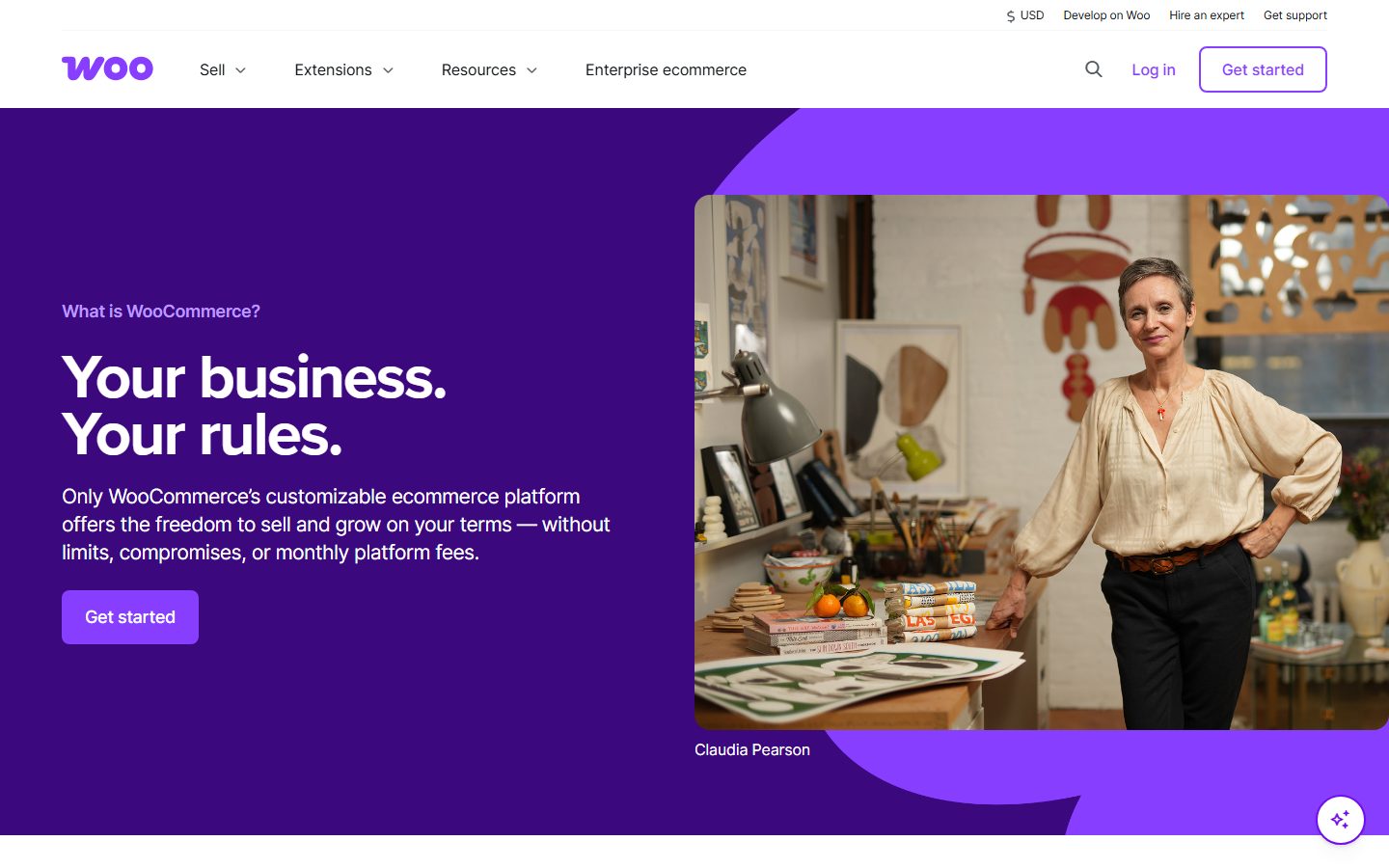
- WooCommerce add-ons for food ordering. WooCommerce is a general shop plugin. Restaurants sometimes use it with an ordering extension for pickup or delivery. It fits a kitchen with its own ordering flow; the checkout optimisation guide covers what to watch.
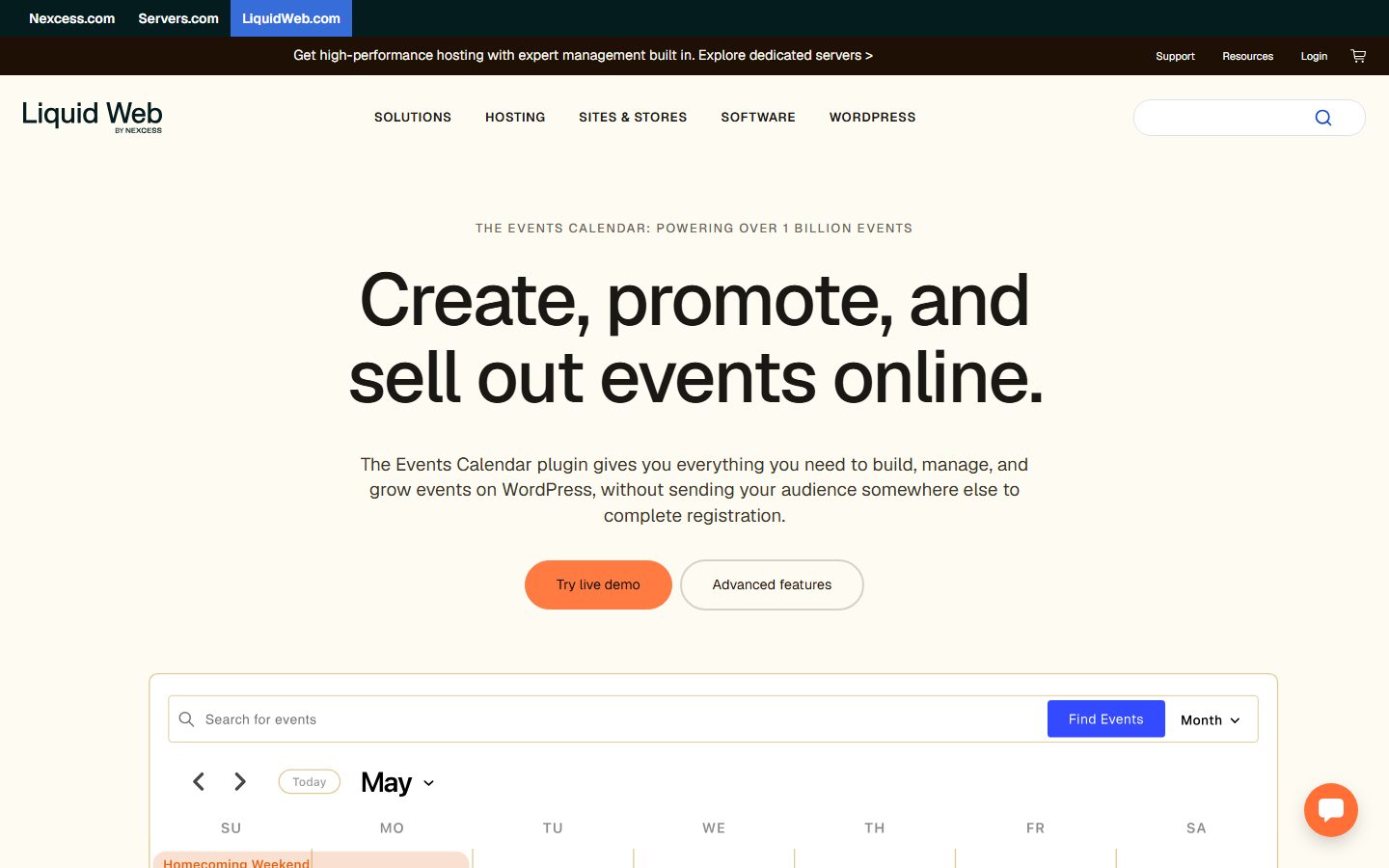
- The Events Calendar (plugin). The wordpress.org listing describes month, list and day views, venues and organisers, and JSON-LD structured data, with recurring events in a paid Pro add-on. It fits a venue running live music or tastings.
- Block themes from the WordPress.org directory. The directory lists over a thousand block themes in its block themes category at the time we looked. A plain block theme plus hand-built patterns suits a small place that wants the lightest possible site.
The screenshots below show the homepage of two of these examples as captured in November 2026, so you can see how each vendor presents the product.
For booking tools more broadly, compare options in our booking plugins roundup.
A comparison checklist to fill in
Copy this table for each theme on your shortlist and complete it from the vendor’s documentation and a demo, not from the marketing page.
| Question | Theme A | Theme B | Theme C |
|---|---|---|---|
| Block theme or classic? | |||
| Menu stored as text? Where? | |||
| Hours editable in one place? | |||
| Reservation method and who owns the data | |||
| Hero image excluded from lazy loading? | |||
| Last update date and changelog | |||
| Required plugins (list them) | |||
| Licence length and renewal terms | |||
| Mobile call and directions buttons | |||
| Can staff edit a price in under two minutes? |
Setup and migration steps
Before you switch
Take a full backup (see backup plugins) and export your menu content to a spreadsheet, because custom menu types can vanish from view when a theme changes. Write down your current opening hours, address and booking links so you can check them against the new site. Build and test on a copy; the staging site guide shows how.
During the switch
Install only the plugins the theme genuinely requires. Import demo content on staging, not on the live site, since demo imports can overwrite pages and settings. Recreate the menu, then set hours and contact details, then connect the booking tool. Place the call button, address and booking link on the first mobile screen.
After the switch
Make a real booking and confirm the email arrives at an address that someone reads. Check that old URLs, especially the menu page, still resolve or redirect. Re-submit your sitemap in Search Console (see Search Console for WordPress) and confirm your business profile on Google lists the same hours.
Common mistakes and red flags
- Publishing the menu only as a PDF or photo, which is awkward on phones and invisible to search.
- Full-screen sliders that push hours and the address below the fold.
- Holiday hours that nobody updates. Test how easy they are to change before you buy.
- A booking form that emails an inbox nobody checks.
- Demo content that relies on a dozen plugins you will never use.
- A theme that has not been updated in a long time or whose vendor gives no support route.
- Stock photos left in place of your own, which weakens trust.
Cost and risk of switching later
The expensive part of changing themes is not the theme; it is the content tied to it. Menu items in a custom post type, shortcodes in page content and builder-specific layouts all have to be rebuilt or converted. Choosing a theme that stores the menu in a plugin or in standard blocks lowers that cost. Reservation data is the other trap: if bookings live with an outside service, ask how to export your customer list before you need to leave.
Budget for yearly licence renewals if the theme is commercial, and plan a review every year or two. For ongoing upkeep see the maintenance checklist.
A one-afternoon evaluation plan on a staging copy
- Set up (30 minutes). Clone your site to staging and install the candidate theme. Import only its menu and homepage demo.
- Edit test (20 minutes). Change a price, add a dish with a dietary label and change next Monday’s opening hours. Pass: done in under two minutes each, with no layout damage.
- Mobile test (20 minutes). On a real phone, check that address, hours, call and booking are visible without scrolling. Pass: all four are reachable in one tap or less.
- Speed test (30 minutes). Run PageSpeed Insights on the homepage and menu page, mobile setting, before and after adding your own photos. Record the Largest Contentful Paint. Pass: within the 2.5 second guideline or no worse than your current site.
- Booking test (20 minutes). Make a booking and a cancellation. Pass: confirmation arrives and the staff address gets the notice.
- Search check (20 minutes). View the page source or a structured data tester for name, address and hours. Pass: they appear as text and in structured data.
- Plugin audit (10 minutes). List required plugins and the theme’s last update date. Fail if either is a concern.
How we will evaluate it
WPMusk has not run hands-on tests of restaurant themes. This page is a buyer’s guide, drawn from vendor documentation and standards, not a test report. When a full review is published we plan to install each theme on the same clean site, measure page weight and loading on a mobile profile, edit menus and hours as a non-developer would, and test the reservation flow, then score against the weights above. This page carries no score: it is guidance for choosing, not a measured result.
Questions people ask
Do I need a restaurant theme or will any theme do?
Any good theme can work if you build the menu and hours yourself. A restaurant theme saves time on layouts and templates, but check what it locks you into.
Can I take reservations without paying a monthly fee?
Some plugins offer a free tier that stores bookings in your dashboard, and the Five Star plugin’s page describes a free version. Third-party services may charge fees; check their current terms.
Is a PDF menu acceptable?
It is a fallback. Text on the page is easier to read on phones, easier to update and better for search and accessibility.
How do I keep opening hours consistent everywhere?
Store them in one place that feeds the header, footer and structured data, and update your Google business profile whenever they change.
Will a restaurant theme slow my site?
It can, mostly through large images, sliders and bundled plugins. Test on mobile before you commit, and see our speed optimisation guide.
Can I change themes later without losing my menu?
Only if the menu does not depend on the old theme’s custom post type. Ask the vendor where menu data is stored, and keep a spreadsheet export as insurance.
This is a buyer’s guide for a type of product. It is based on public documentation, not on hands-on tests, and it carries no score.
← All reviews