A buyer's guide to EU-based WordPress hosting: what data residency really covers, GDPR paperwork and how to check a provider.
What a European data host does, in plain words
A European data host is a hosting provider that stores and processes your website’s data on servers inside Europe, usually inside the European Union, and ideally is itself a company based there. People look for one because the General Data Protection Regulation (GDPR) governs personal data about people in the EU, and keeping that data in the EU, with an EU-based processor, simplifies several questions about where it goes and who can reach it.
It is important to be exact about what this does and does not do. Choosing an EU host does not make a website GDPR compliant. Compliance depends on what your site collects, why, on what legal basis, who else receives it, how long you keep it and what you tell visitors. Hosting is one input. This guide is educational and is not legal advice; if the stakes are high, ask a qualified privacy professional.
How it works under the hood
Three ideas matter.
- Controller and processor. You, deciding why and how personal data is used, are normally the controller. A host that stores it on your behalf is a processor. GDPR requires a written contract with each processor covering how it handles the data. Reputable hosts publish a data processing agreement you can accept in the account settings or sign.
- Data location and transfers. GDPR restricts transfers of personal data outside the EU unless a recognised mechanism applies. The European Commission describes the EU-US Data Privacy Framework as an adequacy decision adopted on 10 July 2023, under which personal data can flow to certified US companies without additional transfer safeguards. Other tools, such as standard contractual clauses, also exist. So a US-owned provider is not automatically off limits, and an EU data centre is not automatically enough: check the provider’s corporate structure, subprocessors and any support access from outside the EU.
- Everything else on the page. The host holds your files and database, but your site also sends data to third parties: fonts, analytics, maps, embedded video, email services, a CDN, payment gateways. Each is a possible transfer outside Europe that hosting location does not change.
Who needs one (and who does not)
Organisations with EU customers or members, public bodies and schools, healthcare-adjacent businesses, agencies serving EU clients, and anyone whose contracts or internal policy require EU data location benefit. It also suits owners who simply prefer a local provider and local-language support.
If your visitors are mostly elsewhere and you hold little personal data, an EU data centre may bring little, and it can add latency for non-European visitors. A brochure site with no forms and no analytics collects almost no personal data anyway. If you run a shop, bookings or a membership scheme, you do collect personal data, so see the WordPress ecommerce guide and hosting by use case. Note that stores also need payment, tax and consumer-law decisions beyond this guide’s scope.
Types and approaches
| Approach | What it means | Strength | Trade-off |
|---|---|---|---|
| EU-headquartered host, EU data centres | Company and servers both in the EU | Simplest story on jurisdiction and transfers | Smaller feature set at some providers; check support language and hours |
| Non-EU provider with an EU region | Servers in the EU, company elsewhere | Wider features and choice | Corporate structure, subprocessors and support access need checking |
| EU cloud server you manage (VPS) | You rent a server in an EU location and run it | Full control over location and software | Compliance and security tasks are yours; see our managed versus VPS guide |
| Managed WordPress host with a location choice | You pick a region when creating the site | Managed support plus EU placement | Not every plan or region is offered everywhere |
What to look for
We weigh hosting on speed 30%, reliability 25%, support 20%, value 15% and ease of use 10%. For a European data host, a sixth consideration, data governance, runs through all of them.
Speed (30%)
Servers inside Europe are fast for European visitors and slower for distant ones, so match location to audience. A CDN can help worldwide, but it may itself process visitor IP addresses outside Europe; check its data handling. Look for current PHP; WordPress’s requirements page recommends PHP 8.3 or greater. Google’s web.dev guidance puts a good Largest Contentful Paint at 2.5 seconds or less, and server response is part of that. See Core Web Vitals.
Reliability (25%)
Check backups, retention and where backups are stored: backups copied to a non-EU region undermine the point of EU hosting. IONOS’s WordPress page mentions georedundant data centres that mirror data to a second location, so ask where the second location is. Ask about uptime commitments and incident communication.
Support (20%)
Check support hours, languages and whether staff outside the EU can access your data in a support case. Some hosts say so in their privacy documentation; ask if they do not.
Value (15%)
Compare plan limits, renewal prices and whether a data processing agreement, backups and staging cost extra. Read prices on the vendor’s pricing page on the day you buy.
Ease of use (10%)
Look for a clear way to accept the data processing agreement, view subprocessors and choose a data centre. Migration help helps if you are leaving a non-EU host.
Data processing agreement and subprocessors
Find the host’s data processing agreement, its list of subprocessors and the countries involved. A vendor that publishes these clearly is easier to audit than one that makes you ask.
Security measures
GDPR expects appropriate technical and organisational measures. Ask what the host provides: encryption in transit, firewalls, malware scanning, isolation between accounts, DDoS protection. Raidboxes states on its site that its hosting is GDPR-compliant and lists SSL encryption, a web application firewall, DDoS protection and an exploit detector, which are vendor claims to weigh against the contract terms. The rest is yours, as covered in the security guide.
Certifications and audits
Ask whether the host holds independent certifications such as ISO standards, and read what they cover. IONOS’s page mentions ISO-certified data centres. Certificates apply to defined scopes, so check what is actually included.
Real products to look at
These are examples, not a ranking, described from vendor pages read while preparing this guide. None of them can make your site compliant on its own; check each provider’s data processing terms yourself.
- Hetzner Cloud. Its page lists locations in Germany (Falkenstein and Nuremberg) and Finland (Helsinki) as well as Singapore and the USA, with stateful firewalls, private networking and an API. It is a server rental, so it fits technical users or those pairing it with a control panel such as SpinupWP, which lists Hetzner among supported providers. You handle the WordPress stack.
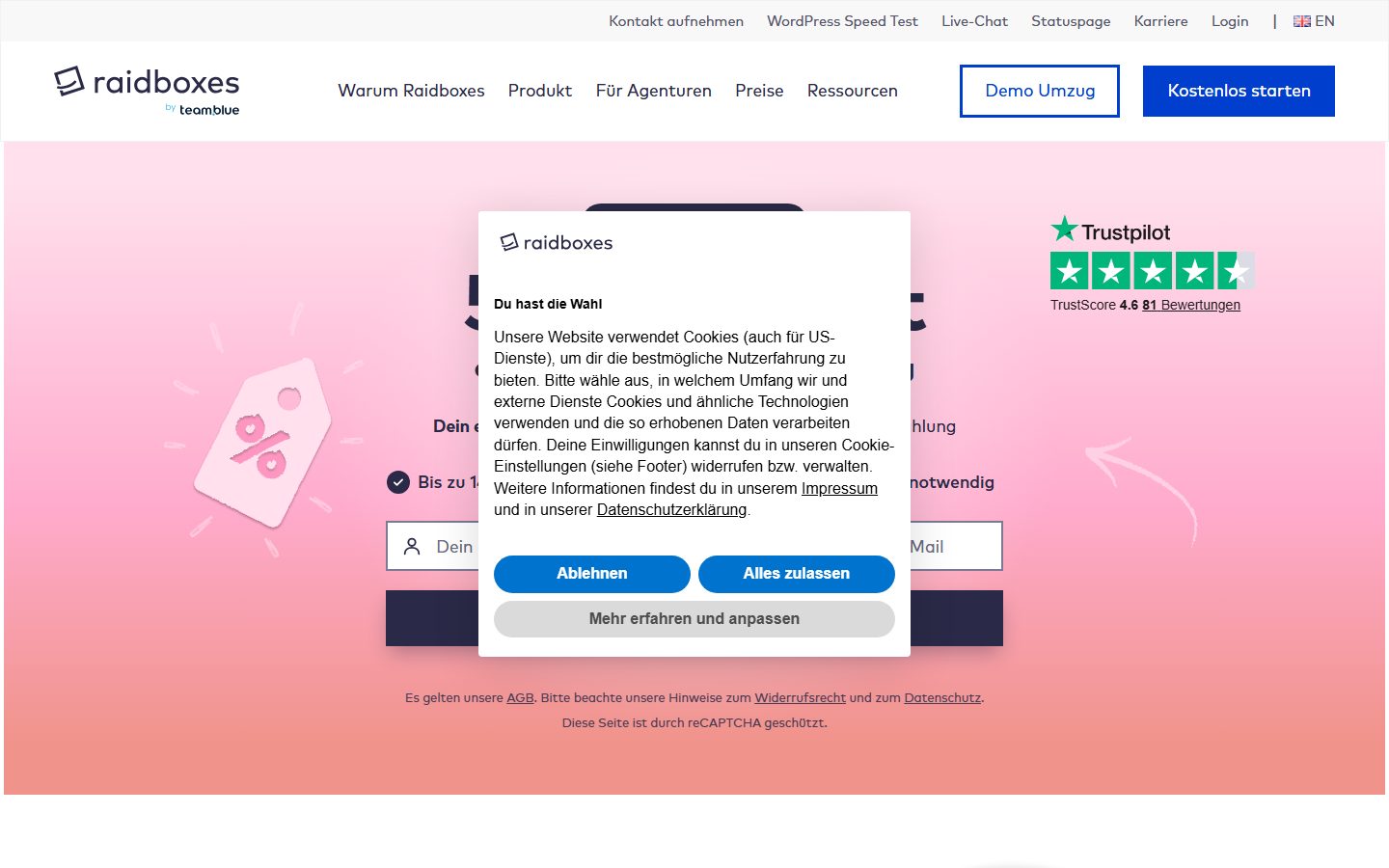
- RAIDBOXES. Presents itself as managed WordPress hosting that handles updates, backups and security, with data stored on German servers and GDPR-oriented features. It fits site owners who want managed WordPress with a German data location.
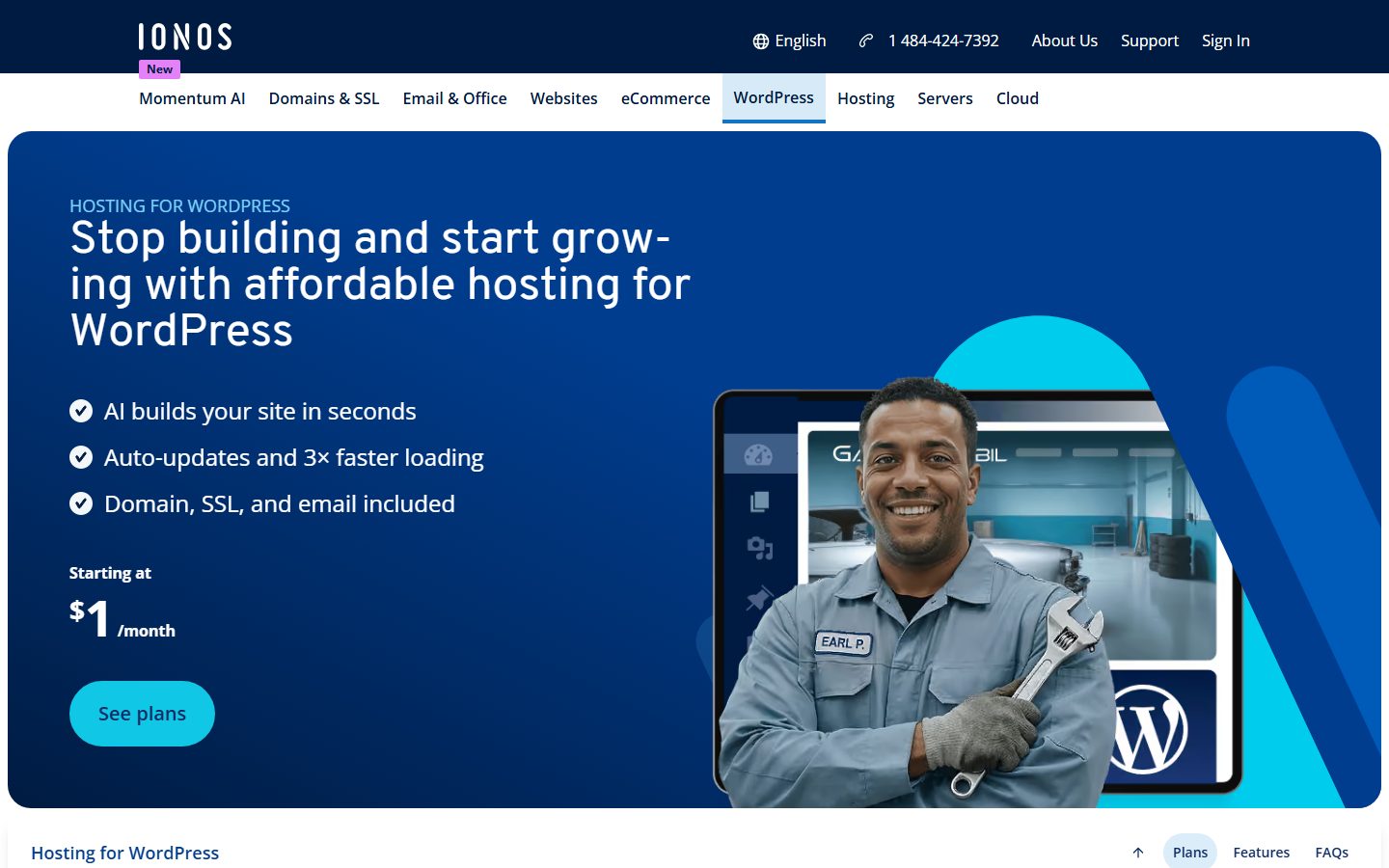
- IONOS. Its WordPress page describes managed hosting with georedundant data centres, NVMe storage, PHP 8.2 to 8.4, SSH and WP-CLI, daily backups kept up to seven days and 24/7 support. The page we read did not name locations or discuss GDPR, so look for those in its documentation and contract terms.
- OVHcloud. Its web hosting page lists one-click WordPress installation and a managed hosting offer for WordPress, and mentions sovereignty as a security topic. The page did not name data centres or discuss GDPR; verify those in its regional and legal pages.
- Cloudways. A managed layer that places servers on providers including DigitalOcean, Vultr, Linode, AWS and Google Cloud across many countries, so you can choose a European location. Its corporate structure and subprocessors need the checks described above.
The screenshots below show the homepage of two of these examples as captured in November 2026, so you can see how each vendor presents the product.
A comparison checklist to fill in
| Question | Host A | Host B | Host C |
|---|---|---|---|
| Company headquarters and legal entity | |||
| Data centre country and city | |||
| Backups stored where? | |||
| Data processing agreement available? | |||
| Subprocessor list and countries | |||
| Support staff access from outside the EU? | |||
| Included email service: where hosted? | |||
| Independent certifications and scope | |||
| Staging, backups, PHP versions | |||
| Renewal price and notice terms |
Setup and migration steps
Before you move
Map your personal data: where visitors’ names, emails, IP addresses and order details go. List every third-party service your site calls. This map matters more than the hosting choice. Take a full backup and review the migration guide.
During the move
Create the account, accept or sign the data processing agreement and choose the EU location. Migrate and test on a temporary address. Replace or configure third-party services that send data abroad: self-host fonts (see how to self-host fonts), configure analytics and email services with EU options or consent, and review plugins that call external APIs. The plugin vetting guide can help with those that do.
After the move
Update your privacy policy to name your host and recipients accurately. Confirm that backups, logs and email are also stored where you expect. Keep a record of what you checked and when, since accountability is part of the regulation. Re-check whenever you add a new plugin or service.
Common mistakes and red flags
- Assuming an EU data centre equals GDPR compliance.
- Forgetting that fonts, maps, video embeds, analytics and CDNs can send visitor data outside the EU.
- Backups or email stored in a different region from the site.
- No data processing agreement, or a vague answer when you ask for one.
- Choosing a host by a “GDPR-compliant” badge without reading the terms.
- Collecting more personal data than the site needs.
- A cookie banner that lists categories but does not actually block scripts until consent.
- Keeping contact-form submissions in the database forever.
Cost and risk of switching later
Switching hosts is technically the same as any WordPress move, but regulatory records add work: you update the privacy policy, your record of processing and the processor agreement, and you confirm the old host deletes your data. Ask each provider how and when it deletes data after you leave, including backups. If you later need to serve customers in another region, you may need a CDN or an additional location, so choose a provider that supports multiple regions or has a clear way to add one. Smaller regional providers may offer fewer features and a smaller ecosystem of tutorials; weigh that against their data governance. Legal rules also change, so revisit your choice periodically rather than treating it as permanent.
A one-afternoon evaluation plan on a staging copy
- Documents first (30 minutes). Before paying, find the data processing agreement, subprocessor list and privacy policy. Pass: you can answer where data and backups live and who can access them.
- Copy the site (45 minutes). Migrate a copy into the EU location. Pass: it works on a temporary URL.
- Third-party scan (30 minutes). Open the site with browser developer tools, load the network tab and list every external domain contacted. Pass: each is known, necessary and covered by your consent and privacy documentation.
- Backup location check (15 minutes). Ask support or read the documentation to confirm backup storage. Pass: a specific answer.
- Speed (30 minutes). Run PageSpeed Insights from the region your audience is in. Pass: server response is acceptable and LCP is within the 2.5 second guideline.
- Support test (20 minutes). Ask how support access to customer data is handled. Pass: a clear, consistent answer.
- Exit check (15 minutes). Read the data deletion terms for account closure. Pass: stated and reasonable.
How we will evaluate it
WPMusk has not run hands-on tests of European data hosts, and we are not lawyers. This guide is built from vendor and regulator documentation and contains no measured results or legal conclusions. A full review would host the same site at each provider, verify data centre locations and contract documents, measure response times from European locations, test backups, staging and support, then score against the weights above. This page carries no score: it is guidance for choosing, not a measured result.
Questions people ask
Does EU hosting make my site GDPR compliant?
No. It addresses one question, data location. Compliance also covers legal basis, notices, consent, retention, security and the third-party services your site uses.
Can I use a US host?
Possibly. The European Commission describes the EU-US Data Privacy Framework as allowing transfers to certified US companies without additional safeguards, and other mechanisms exist. Check the provider’s certification and terms, or seek legal advice.
Do I need a data processing agreement?
If the host processes personal data for you, GDPR requires a contract with it. Most reputable hosts provide a standard one.
Does a CDN break EU data location?
It can, because a CDN handles visitor requests and IP addresses in many places. Read its data processing terms and options before enabling it. See Cloudflare for WordPress for the general setup.
What about cookies and analytics?
These are separate from hosting. Choose consent tools that block scripts until agreement and analytics set up with your privacy settings. Search Console and analytics tools also have data settings; see Search Console for WordPress.
Will an EU host be slower?
For European visitors it is often faster; for visitors far away it can be slower unless you use a CDN or another region.
This is a buyer’s guide for a type of product. It is based on public documentation, not on hands-on tests, and it carries no score.
← All reviews